
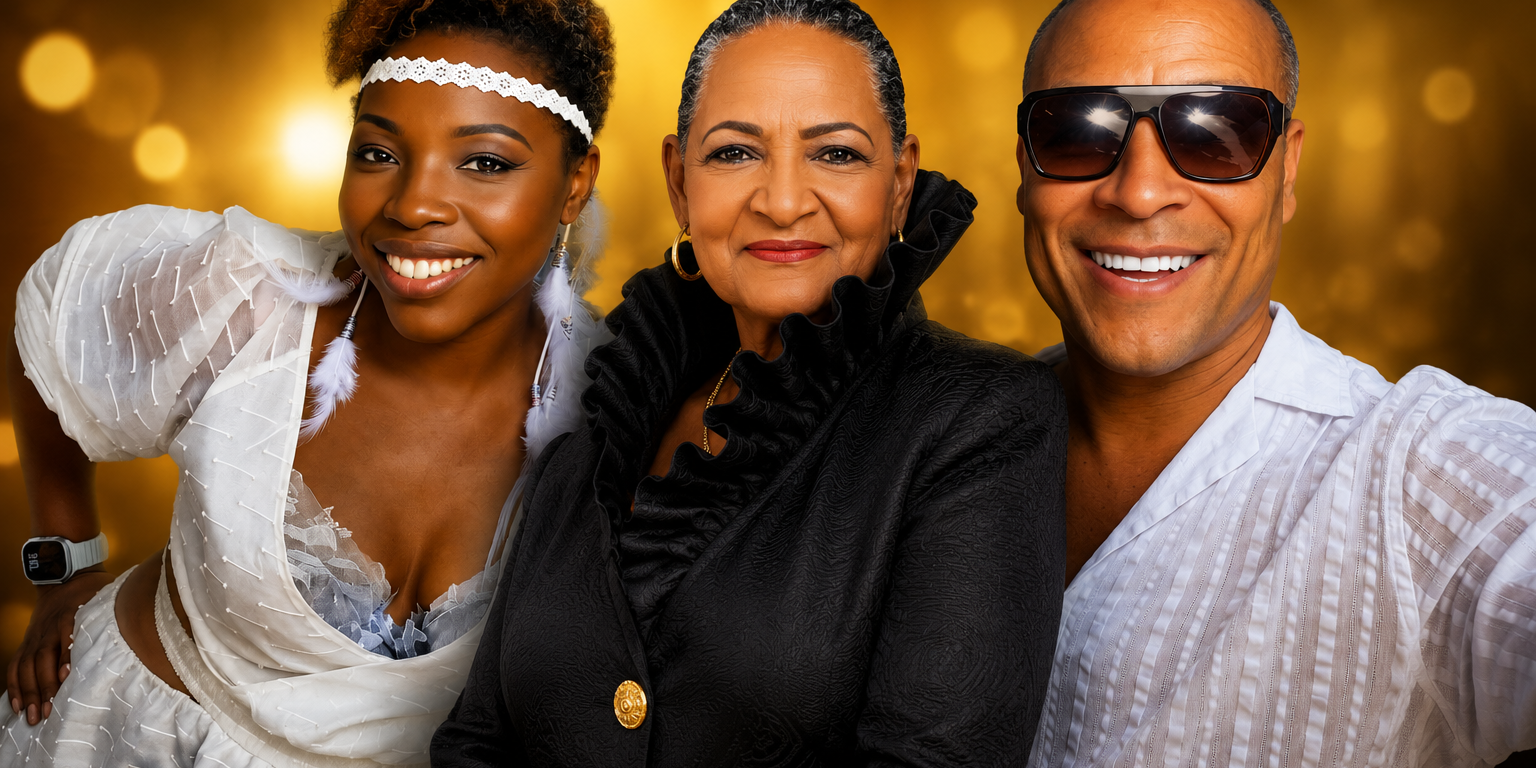
Pam Morris-Walton Day July 25th
By Dr. LaDonna Raeh
Pam Morris-Walton Day July 25th
Nope, it’s not Sunday, y’all.
I know some of you looked at the calendar and said, “Wait a minute. What happened?”
Because when Pam Morris-Walton walked into The Afternoon Show studio, the atmosphere shifted. The music got a little louder. The smiles got a little wider. The room felt warmer. And for a few moments, a weekday afternoon on WVON felt a whole lot like Sunday morning.
That is the power of Pam Morris-Walton.
Chicago will officially celebrate Pam Morris-Walton Day during the Chicago Gospel Music Festival at Millennium Park. It is a well-deserved honor recognizing a woman whose voice, faith, service and influence have helped shape this city’s gospel identity for more than four decades.
But after sitting across from her, hearing her story and watching her respond to a beautiful tribute produced by WVON’s Annette Flournoy, I realized something: Pam Morris-Walton Day is about far more than a date on a calendar.
It is about giving people their flowers while they are still here to smell them, hold them and understand just how deeply their work has mattered.
Pam’s career stretches across more than 50 years in broadcasting, including more than 40 years serving Chicago audiences. Her journey began at KJLH in Los Angeles, the radio station owned by Stevie Wonder, and eventually brought her to Chicago, where she became one of the most recognizable and trusted voices in gospel radio.
Today, she is affectionately known as Chicago’s “Gospel Sister.”
And that title is not a gimmick.
Pam has done what a good sister does. She has encouraged us. Corrected us. Prayed for us. Celebrated with us. Cried with us. And on Sunday mornings, she has reminded listeners that no matter what happened during the week, there is still a reason to get up, lift your head and keep moving forward.
Her work, however, has extended far beyond the radio studio.
Pam played a critical role in expanding the Chicago Gospel Music Festival, helping move it from the South Side into the heart of downtown Chicago. That move opened the festival to a larger and more diverse audience while reminding the world that gospel music is not a side note in Chicago’s history.
Gospel is Chicago history.
Chicago helped give birth to modern gospel music through the sounds of Thomas A. Dorsey, Mahalia Jackson, Albertina Walker, The Caravans and countless others. Pam Morris-Walton has spent much of her career protecting, promoting and expanding that legacy.
During her time working with the city, she helped bring more than 2,500 gospel artists to Chicago, including legends such as Pastor Shirley Caesar, Donnie McClurkin, Kirk Franklin and The Clark Sisters.
And let Pam correct you quickly: that is 2,500 artists, not simply 2,500 performers.
One choir may contain 50 people, but it is counted as one artist. That distinction tells you something about Pam. She knows the history. She respects the details. And she understands the responsibility that comes with being a gatekeeper of the culture.
Her reach also traveled far beyond Chicago.
Pam helped introduce live gospel experiences to audiences in Italy, Africa and other parts of the world. She did not simply export music. She exported emotion, spirit, history and the unmistakable power of Black faith traditions.
But behind the impressive résumé is a woman who has survived what many could not imagine.
Pam is a heart transplant recipient.
She spent 57 days in the hospital waiting for her body to accept a new heart. The heart arrived after 27 days, but her recovery required patience, prayer, medical expertise and extraordinary faith.
Her book, 57 Days: The Wait for a New Heart Sparks a Spiritual Journey of Faith and Love, documents that experience.
During our conversation, Pam said something that stopped me in my tracks:
“Death is non-negotiable.”
A heart cannot come from a living donor. For Pam to receive a second chance at life, another life had to end. A 20-year-old organ donor saved seven lives, including hers.
That truth is heavy.
Pam does not run from it. She carries it with gratitude, responsibility and purpose. She uses her platform to encourage organ donation, share her testimony and remind others that every day of life should mean something.
When I asked her what she was most grateful for, she did not mention the awards, the international travel, the famous people she has met or the walls in her home covered with plaques and photographs.
She said she was grateful to wake up on God’s “wake-up list.”
That was the mic-drop moment.
Because before we can chase success, earn titles or receive recognition, we must first wake up.
Pam said if you are breathing, you can still move forward. You can get up. You can serve. You can make a different decision. You can make a difference in someone else’s life.
That is the real meaning of Pam Morris-Walton Day.
It is a celebration of life.
It is a celebration of resilience.
It is a celebration of consistency in a world that often rewards performance over authenticity.
Pam Morris-Walton is the same woman on the microphone and away from it. She does not break character because there is no character to break. The joy, faith, kindness and sincerity we hear on the air are not part of an act.
That is who she is.
In broadcasting, authenticity cannot be manufactured. Audiences may not always be able to explain it, but they can feel when someone is being real.
Chicago has felt Pam’s authenticity for decades.
We have felt it through her music selections, her interviews, her prayers, her health journey and her determination to use her voice to uplift rather than tear down.
Pam also took time during our interview to thank WVON President and CEO Melody Spann Cooper, who personally invited her to join the station. Melody compared recruiting Pam to signing a star quarterback. When a player of that caliber is available, you bring her to your team.
And Chicago should understand the importance of that team.
WVON remains a Black-owned and Black-operated radio station committed to preserving our voices, telling our stories and honoring our legends. Pam Morris-Walton Day represents what can happen when Black institutions recognize, protect and celebrate Black excellence.
Too often, we wait until our legends are gone before we fully explain their importance.
We produce documentaries after they can no longer see them. We name streets after they can no longer travel them. We write tributes after they can no longer read them.
This time, we got it right.
Pam Morris-Walton will be present to hear the applause.
She will see the people gather.
She will know that the city she has served understands the value of her contribution.
Mayor Brandon Johnson, the City of Chicago, WVON, Melody Spann Cooper and the Chicago gospel community are giving Pam her flowers now.
And after hearing her story, I would argue that Pam has been giving flowers to Chicago for more than 40 years.
She has given us encouragement.
She has given us music.
She has given us truth.
She has given us laughter.
She has given us prayer.
She has given us one of her most important messages: In a world where you can be anything, be kind.
So, no, it is not Sunday.
But when Chicago gathers at Millennium Park to celebrate Pam Morris-Walton Day, do not be surprised if it feels like church.
Do not be surprised if somebody shouts.
Do not be surprised if somebody cries.
And do not be surprised when Pam Morris-Walton reminds us once again that she is our Gospel Sister, she loves us, and there is absolutely nothing we can do about it.