
Table 53: When Legacy, Laughter, and Leadership Shared the Same Room
By LaDonna Raeh
Friday morning didn’t feel like just another event—it felt like a checkpoint in history.
I walked into the 40th Annual Interfaith Breakfast commemorating the life and work of Martin Luther King Jr. with that quiet awareness you get when you know something meaningful is about to happen. The theme—Defending Our Democracy, Protecting Our Rights—wasn’t decorative. It was a warning label and a call to action wrapped into one.
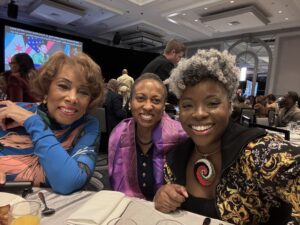
I took my seat at Table 53, reserved for radio, and immediately knew this table was going to talk back. Sitting with me was Sonia, Dr. Erica Blakely and her husband Reverend Blakely, and media icon Hermene Hartman, the founder of N’DIGO Magazine. Hermene joked that she knew my table would be star-studded—and listen, she wasn’t wrong. When someone who launched a Black “magapaper” in 1989 clocks the room, you listen. This wasn’t networking. This was lineage.
The program unfolded with intention. Chicago Youth United lifted the room musically, and interfaith leaders followed—Jewish, Christian, Muslim—standing together not as a performance, but as a practice. It was one of those rare moments where unity didn’t feel aspirational. It felt operational.
Then the room shifted.
When Emanuel Chris Welch, the 70th Speaker of the Illinois House of Representatives, took the stage, he anchored the moment. His cadence was calm, deliberate—so much so that more than once I caught myself thinking he sounded like Barack Obama. Not in mimicry, but in that same measured authority that doesn’t rush its power. The room wasn’t listening politely. It was listening intentionally.
And then there was Kamala Harris.
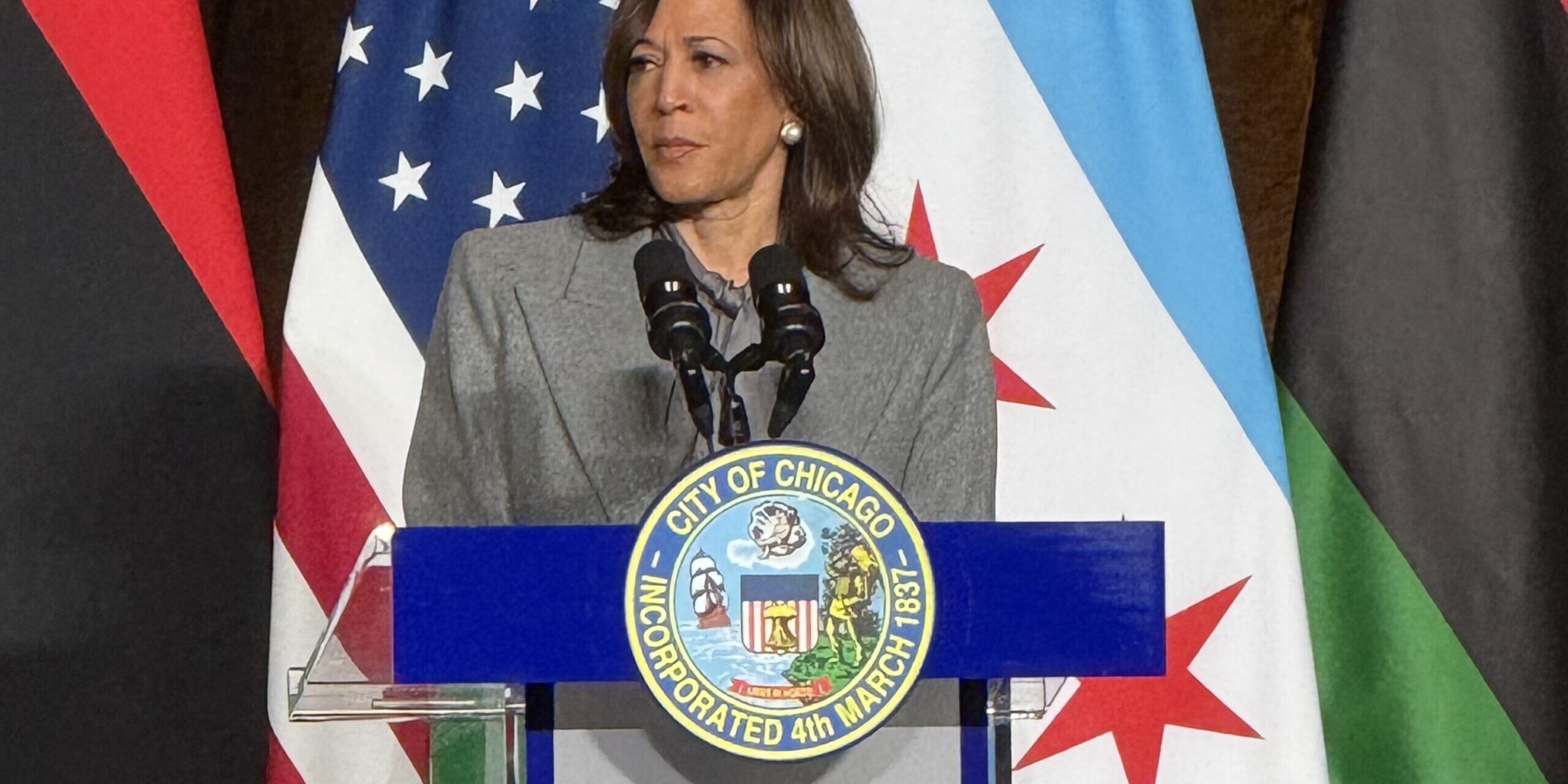
Watching her speak, framed by the flags and the City of Chicago seal, I didn’t just see a Vice President—I saw command. She spoke about Dr. King’s love for this country being active, unconditional, and costly. She talked about standing at the Lorraine Motel the night before, feeling the weight of government-sanctioned segregation, voter suppression, churches bombed, lives stolen. And then she did what great leaders do—she bridged past and present.
She reminded us that hate and fear were once weaponized by the powerful to terrorize the powerless. And then she said the part that landed heavy: the people were powerful then—and they still are now. She talked about people being sick and tired of being sick and tired. About voter suppression. About families being torn from homes and churches. About rising costs forcing impossible choices between dignity and survival. And she made it clear—this wasn’t the moment to throw our hands up. This was the moment to roll up our sleeves and organize.
Phones went up—not out of distraction, but instinct. This was a document-the-moment kind of speech.
The Champion of Freedom Awards followed, honoring Jacqueline L. Jackson and Rev. David Black. Jacqueline Jackson brought the room to laughter in a way only elders who’ve lived inside history can. She shared that her husband, Rev. Jesse L. Jackson, Sr., told her to stay on script—so she decided not to bring one at all. The room erupted. Not because it was a joke, but because it was real.
Then she shifted us again.
She said she knows she is part of the past—and she remembers when she was once considered the future. She offered wisdom like only someone with decades can:
“Every hello is not glad to see you.
Every closed eye is not asleep.
Every goodbye is not gone…
Become the good person you are looking for. Don’t look any further.”
That wasn’t applause wisdom. That was inheritance.
When Chicago Mayor Brandon Johnson was introduced, the entire room stood. And I clocked that—because I hear the call-ins. I hear people say he’s done nothing. But I was in a room where clergy, elders, organizers, media, and elected officials rose without hesitation. That disconnect told me everything I needed to know about perception versus proximity.
The Mayor spoke like someone who knows these neighborhoods. He talked about community—not in theory, but in memory. Borrowing sugar from a neighbor (and then laughing because who really lends a whole loaf of bread?). Borrowing each other’s cable—then apologizing in case Comcast was sponsoring the breakfast. The room cracked open laughing, because it was familiar. And then it got quiet again, because we knew what he was really saying: we used to rely on each other.
When he talked about “taxing the rich,” I’ll be honest—I don’t love that framing. I don’t love the word tax or the word rich. But what I respected is that he landed where it actually matters: everyone paying their fair share. That’s not punishment. That’s balance. And words matter.
Somewhere between laughter and reflection, I looked around the room and spotted Danny K. Davis—steady, consistent, still showing up. I also shared a moment with Donna Miller, and that photo captured exactly what the day felt like: women grounded in community and governance, not posing—present.
By the time I left Table 53, I didn’t feel impressed. I felt affirmed.
This wasn’t about star power. It was about alignment. Faith not hiding from politics. Media not confusing neutrality with silence. Leadership showing up without theatrics. And Dr. King’s legacy not being quoted—but practiced.
Sometimes the truth doesn’t trend.
Sometimes it stands up, claps, laughs, remembers—and then gets back to work.
Friday was one of those days.